

Key Takeaways
- Implementing a safe crypto gambling protocol is essential for protecting your digital assets from unregulated offshore operators and technical vulnerabilities.
- While crypto adoption is rising, currently no UKGC-licensed operator is permitted to accept direct cryptocurrency payments, making “legal bitcoin casinos” a complex regulatory grey area in the UK.
- Spotting a fake crypto casino requires verifying “Provably Fair” algorithms and cross-referencing licensing claims directly with regulatory databases like the MGA or Curacao eGaming.
The High-Stakes Shift to Digital Assets
The gambling landscape is undergoing a demographic transformation. Recent 2025 briefings from the UK Gambling Commission (UKGC) highlight that consumers under 40 increasingly view digital assets as their primary financial tool.
This shift has created a “pressure building within the system.” Many players are searching for a legal bitcoin casino only to find that the UK’s regulated market has not yet opened its doors to direct crypto wagering.
As a result, a high-risk, high-reward niche has emerged. This guide provides the definitive safe crypto gambling protocol to help you navigate this frontier without falling victim to the scams that plague the unregulated sector.
Is Crypto Gambling Legal in the UK?
The short answer is “no” for direct transactions with UK-licensed firms. As of early 2025, the UKGC does not allow its licensees to accept Bitcoin or other altcoins because of the difficulty in verifying the “Source of Wealth” (SoW).
For a platform to be a truly legal bitcoin casino in Britain, it must hold a UKGC licence. However, the UKGC’s current stance is that the pseudonymity of the blockchain makes Anti-Money Laundering (AML) compliance nearly impossible under existing frameworks.
Players who use offshore crypto sites are essentially stepping outside the UK’s “safety net.” This means you lose the protection of the Gambling Ombudsman and the strict deposit-protection rules that govern The Casino Count.
How to Spot a Fake Crypto Casino
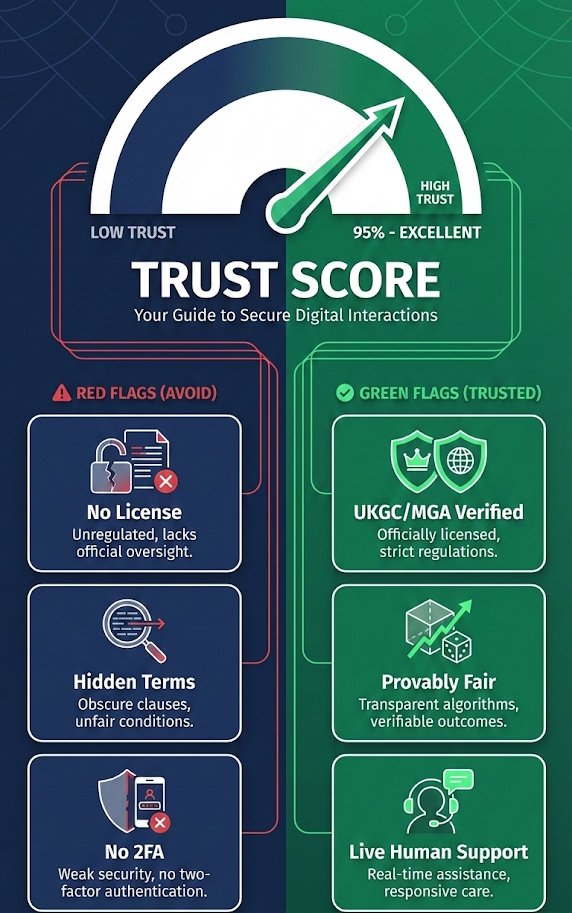
In the unregulated space, the “Wild West” analogy is frequently used for a reason. Fraudsters often build sleek, professional-looking sites that are nothing more than “deposit traps.”
One common red flag is a lack of transparency regarding the Random Number Generator (RNG). Before you play, you must understand how these systems work by consulting How To Play Casino Game Guides.
Use these three steps to verify a site’s legitimacy:
- Verify the License Link: Do not trust a logo at the bottom of the page. Click it; it must lead to a live validation page on the regulator’s official domain (e.g., gaming-curacao.com).
- Check for “Provably Fair” Tools: Legitimate crypto-native sites allow you to verify every spin or hand using a cryptographic hash. If this tool is missing, the games are likely “black boxes” with adjusted house edges.
- The Support Stress Test: Send a complex technical query to their live chat. Fake sites often use basic bots or have no human staff to answer questions about blockchain confirmations or KYC.
The Truth About VPN Gambling
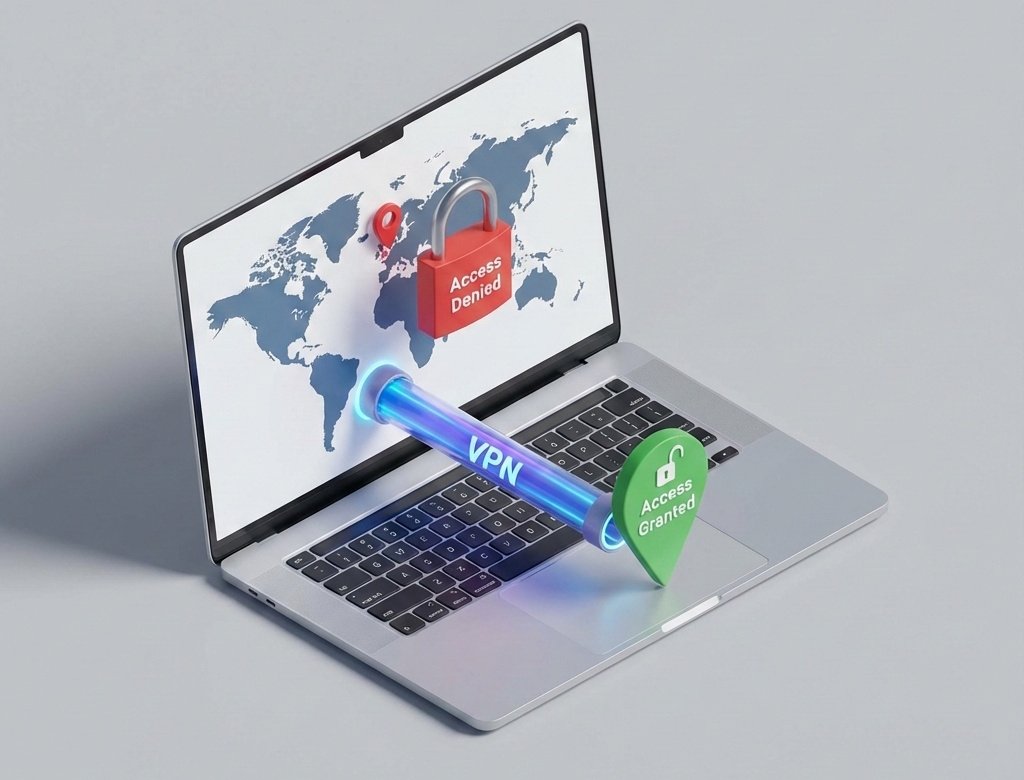
Is VPN gambling legal? This is perhaps the most misunderstood topic in the niche. While using a VPN is not a criminal offence in the UK, it is almost certainly a violation of a casino’s Terms of Service (ToS).
Most operators use sophisticated geolocation tools to detect VPN exit nodes. If you win a significant jackpot while “spoofing” your location, the casino has the legal right to void your winnings and freeze your account.
We have seen cases where players lost five-figure sums because they breached the “one account per jurisdiction” rule. If you are still learning the ropes, check The Casino Count Blog for updates on which regions are currently blacklisted by major operators.
Why Crypto Bonuses Are Different
You may notice that offshore crypto casinos offer bonuses that dwarf those found in the UK. A standard UK bonus might be £100, while a crypto site offers 5 BTC (worth over £200,000 at recent valuations).
There is an insider reason for this. UK-licensed operators are subject to a 21% Remote Gaming Duty (RGD) and a new statutory levy. These costs are often passed to the player via lower bonus caps and higher wagering requirements.
Offshore sites avoid these taxes, allowing them to offer “meatier” incentives. However, these bonuses often come with “predatory” terms hidden in the small print, such as “maximum win” limits that are not clearly stated in the marketing.
Establishing Your Own Safe Crypto Gambling Protocol
Safety in this niche is not about finding a perfect site; it is about mitigating your own risk. You should treat crypto gambling as a “tier-two” activity, never using your primary hardware wallet for casino transactions.
Follow these technical safety rules:
- Use an Intermediary Wallet: Never deposit directly from an exchange like Coinbase or Binance. If the exchange detects the transaction is for gambling, they may lock your entire financial portfolio.
- Enable 2FA (Two-Factor Authentication): If a site does not offer 2FA via an app like Google Authenticator, do not use it. SMS-based 2FA is vulnerable to SIM-swapping attacks.
- Small Batch Withdrawals: Do not let your balance sit on the site. Withdraw your winnings to your own wallet as soon as you meet the wagering requirements.
The Role of “Provably Fair” Technology
In traditional casinos, you trust the UKGC to audit the software. In safe crypto gambling, you trust the maths. Provably Fair technology uses three strings of data: a Server Seed, a Client Seed, and a Nonce.
Before you bet, the casino provides a hashed version of the Server Seed. After the game, you can check that the result was not altered based on your bet size. This is the gold standard of the safe crypto protocol.
If you are new to these concepts, it is vital to start with the basics of digital safety. Reading A Practical Guide to Responsible Gambling will help you set limits before the high-speed nature of crypto transactions takes over.
Responsible Gambling in the Crypto Era
The speed and anonymity of cryptocurrency can lead to “disassociation.” When you are betting in bits or satoshis rather than pounds and pence, the perceived value of the money can vanish.
Gambling should be fun. If it stops being fun, stop. We strongly recommend using tools like GAMSTOP for traditional sites and BetBlocker for unregulated ones.
You can also find support at BeGambleAware.org or GamCare. Remember that once a crypto transaction is sent, it cannot be reversed by any bank or authority.
Frequently Asked Questions (FAQs)
Can I get my money back if a crypto casino scams me
No. Cryptocurrency transactions are immutable. Unlike a credit card or a bank transfer, there is no “chargeback” mechanism. This is why following a safe crypto protocol is your only line of defence.
Why does the UKGC not license Bitcoin casinos?
The primary hurdle is the “know your customer” (KYC) requirement. The UKGC requires operators to prove exactly where a player’s money comes from to prevent money laundering. Anonymous blockchain wallets make this audit trail difficult to verify to the regulator’s satisfaction.
Are “No KYC” casinos safe?
Rarely. While “No KYC” is a major selling point for privacy-conscious players, it is also a massive red flag. If a site does not care who you are when you deposit, they often use that same lack of accountability to ignore you when you try to withdraw.
Is it legal to use a VPN to play from the UK?
It is not illegal in terms of criminal law, but it is a “material breach” of the contract you sign when you create an account. You risk permanent account closure and the forfeiture of all funds.
What coin is the best for safe crypto gambling?
Bitcoin remains the most accepted, but Litecoin and Bitcoin Cash are often preferred by seasoned players due to lower network fees and faster confirmation times. High fees on the Ethereum network can eat into your bankroll.
Stay informed and gamble safely. For more insights, contact us at info@thecasinocount.com.




Leave a Reply