

Key Takeaways
- Understanding the psychology of variance is the only way to separate emotional reactions from the mathematical reality of gambling.
- Variance explained through the lens of gambling math reveals that losing streaks are a statistical certainty, not a sign of a “rigged” system.
- Recognising cognitive biases, such as the Gambler’s Fallacy, helps players maintain control and adhere to responsible gambling practices.
Have you ever sat through ten consecutive losing hands of blackjack and felt certain the next one must be a winner? Or perhaps you’ve watched a slot machine go “cold” and assumed it was broken?
This is your brain struggling with the cold, hard reality of gambling math. Humans are evolved to find patterns in nature to survive, but in the world of regulated online casinos, those patterns simply do not exist.
The tendency to see patterns in randomness often leads players to question the integrity of the game. For a look at how transparency and randomness are maintained in a live environment, see our insider guide to live dealer dynamics.
At The Casino Count, we believe that transparency is the best tool a player has. By understanding how randomness is manufactured and how your mind tries to trick you, you can approach gaming with a clinical, informed perspective.
What is Variance Explained?
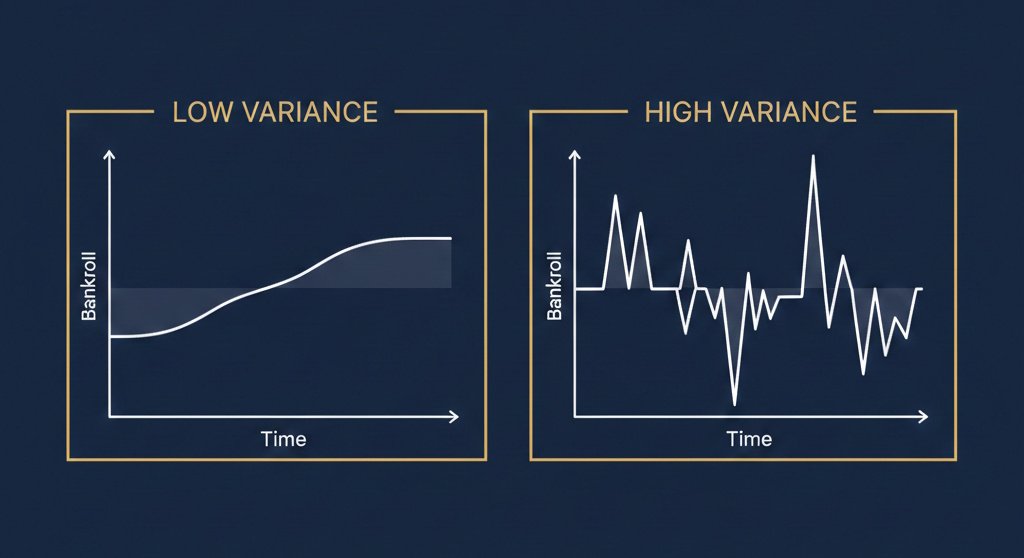
In the simplest terms, variance is the measure of how far a set of numbers is spread out from their average value. In gambling, it represents the “swing” between your expected return and your actual short-term results.
If a game has a 96% Return to Player (RTP), which is the industry average for slots, you expect to get £96 back for every £100 wagered over millions of spins. However, in a single session, you might lose the full £100 or win £1,000 because of high variance.
High variance means the results are volatile, with long droughts followed by large spikes. Low variance offers more frequent, smaller wins that stay closer to the statistical average.
Why Do I Keep Losing?
The most common question frustrated players ask is “Why do I keep losing?” The answer usually lies in the intersection of the House Edge and the “Short Run.”
Every game at a regulated casino is mathematically tilted in favour of the house. Over thousands of hours, the house will always win, but in the short term, variance can make it feel like you are being targeted.
If you are experiencing a losing streak, it isn’t because the software has “turned against you.” It is simply a cluster of outcomes within a random distribution that feels significant because it is happening to your wallet.
When the brain fails to process variance correctly, it often triggers an emotional response known as ’tilt.’ To understand the biological triggers behind this frustration and how to stay disciplined, you can read our deep dive into tilt control and the neuroscience of losing.
Is Online Blackjack Rigged?
A common myth is that online blackjack is rigged, especially when the dealer hits a string of 21s. In the UK, every licensed operator must have their software tested by independent labs like eCOGRA or iTech Labs.
These agencies ensure the Random Number Generator (RNG) is truly unpredictable. When you play at a site featured on The Casino Count Blog, you are playing a game that has been scrutinised by the UK Gambling Commission (UKGC).
The dealer’s “luck” is just variance in action. Because the dealer must follow strict rules—such as hitting on 16—their outcomes are more predictable over time, whereas player variance is influenced by their own decisions.
How Does RNG Actually Work?
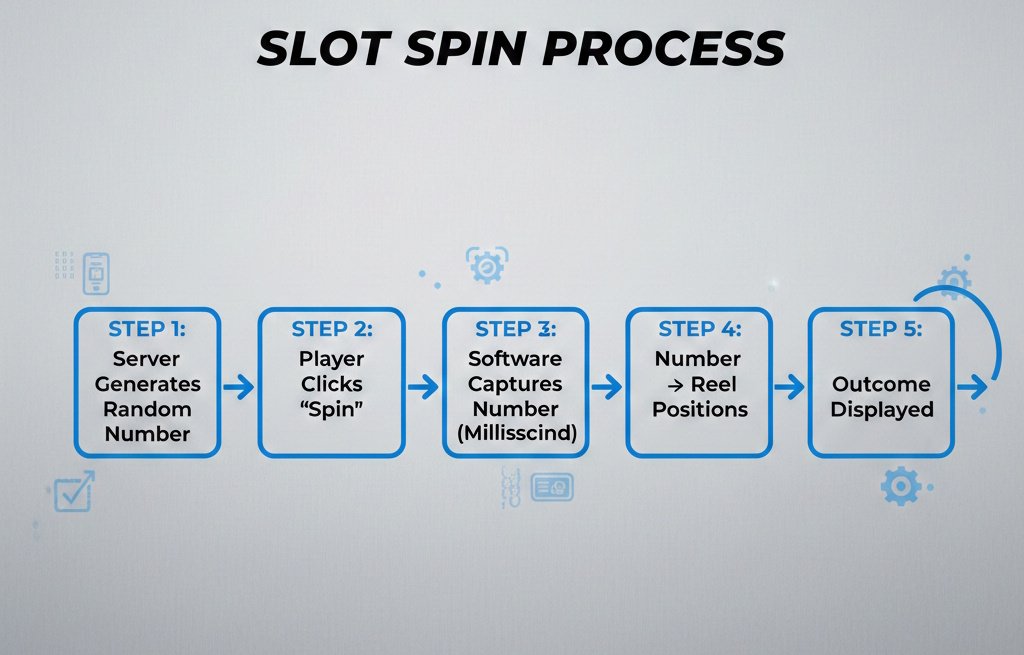
The Random Number Generator is the heart of every digital casino game. It is a complex algorithm that produces thousands of numbers every second, even when no one is playing.
When you click “Spin” or “Deal,” the software picks the number generated at that exact microsecond. This number determines the outcome of the round instantly.
There is no memory in an RNG. The software does not know if you won or lost the previous hand; it does not care how much you have spent. Each event is an independent event in mathematical terms.
What is Standard Deviation in Slots?
While RTP tells you what happens in the long run, Standard Deviation tells you how much the results will fluctuate in the short term. It is the mathematical foundation of “Volatility.”
A slot with high standard deviation will have symbols that pay out massive amounts but appear rarely. This creates the “big win” potential that many players seek, but it also creates the highest risk of rapid bankroll depletion.
Understanding these metrics is vital before you start wagering. If you are new to these concepts, we recommend reading our How To Play Casino Game Guides to understand the mechanics of different titles.
Debunking the “Hot” and “Cold” Myth
Many players believe that a slot machine is “due” for a payout if it hasn’t paid out in a while. This is known as the Gambler’s Fallacy.
Because of the RNG logic explained above, a slot machine is never “hot” or “cold.” The probability of hitting a jackpot is exactly the same on every single spin, regardless of what happened five minutes ago.
The UKGC has issued significant fines to operators who use misleading language that implies a game is “ready to pay.” In a fair environment, the past never influences the future.
The Role of the UKGC and Fairness
The UK Gambling Commission is one of the strictest regulators in the world. They require operators to display the RTP clearly and ensure that games are not designed to exploit psychological vulnerabilities.
Recent data shows that the UKGC has increased its enforcement actions, with fines reaching record highs for failures in social responsibility and technical compliance. This oversight is what keeps the “math” of the games honest.
If an operator claims a 24-hour payout, but our testing shows it takes 48 hours, we report that discrepancy. We are the bridge between the regulator’s dry technical standards and your actual playing experience.
The “Critical Friend” Perspective on RTP
You will often see “96% RTP” listed on slot thumbnails. As your critical friend, we must remind you that this figure is calculated over millions of cycles.
It is not a guarantee for your session. In fact, for a typical session of 100 spins, your actual return could be anything from 0% to 1,000%.
The casino relies on you misunderstanding this statistic. They want you to think 96% means you only “lose” £4 every time you play £100, ignoring the massive swings that variance causes.
Responsible Gambling: Staying in Control
Gambling should be fun. If it stops being fun, stop immediately. The psychology of variance can be addictive because the brain’s dopamine system reacts more strongly to “near misses” and unpredictable rewards.
If you feel you are chasing losses or struggling to stop, there are free, professional tools available to help you.
- BeGambleAware: For confidential support and advice.
- GAMSTOP: A free service that lets you self-exclude from all online gambling companies licensed in Great Britain.
- BetBlocker: Free tool to block gambling websites across all your devices.
Frequently Asked Questions (FAQs)
Does changing my bet size affect the RNG?
No. The RNG generates numbers independently of your stake. While a higher bet leads to larger potential wins or losses, it does not change the mathematical probability of a winning combination appearing.
Can a casino “turn down” the RTP during a winning streak?
No. In the UK, RTP settings are hard-coded into the game files provided by the software developer (like NetEnt or Microgaming). An operator cannot change these settings on the fly to stop a player from winning.
What is the difference between Variance and Volatility?
In the gambling industry, these terms are often used interchangeably. Technically, variance is the mathematical spread of results, while volatility is the term used by developers to describe how a game “feels”—high volatility means fewer but larger wins.
Why do “Near Misses” happen so often?
In some games, the reels are weighted so that high-value symbols appear just above or below the payline more frequently. While this is mathematically “random” based on the reel mapping, it is a psychological tactic designed to make you feel like a win is “close.”




Leave a Reply