

When it comes to gambling, understanding key concepts like house edge and RTP (Return to Player) can make a world of difference in how you approach casino games. These terms aren’t just industry jargon—they represent the mechanics behind how casino games are designed and how your chances of winning are determined.
Highlights:
- The house edge is what keeps casinos in business. Put simply, it’s the built-in advantage a casino has over players in every game they offer.
- RTP, or Return to Player, is a term that explains how much of the money wagered on a game is paid back to players over time.
- House edge and RTP are two sides of the same coin—they work hand in hand to define how casino games operate
- When you understand house edge and RTP, you’re better equipped to choose games that suit your style and goals.
At The Casino Count we are dedicated to helping you make the most of your online gambling experience. Part of that includes helping you navigate the terms and lingo used in online casinos.
The house edge reveals the casino’s built-in advantage, while RTP highlights how much of the wagered money a game returns to players over time. Together, they provide valuable insight into the fairness and profitability of different games. By learning how these factors work, you can make more informed decisions about which games to play and how to manage your bets effectively.
In this blog, we’ll break down the meaning of house edge and RTP, explain how they influence your gaming experience, and share tips on choosing games with better odds. Whether you’re a beginner or a seasoned player, understanding these concepts is crucial to making smarter, more strategic choices in the casino.
What Is House Edge?
The house edge is what keeps casinos in business. Put simply, it’s the built-in advantage a casino has over players in every game they offer. Expressed as a percentage, it shows how much of each bet the casino expects to keep over time. For instance, a game with a 5% house edge means the casino, on average, keeps £5 out of every £100 wagered.
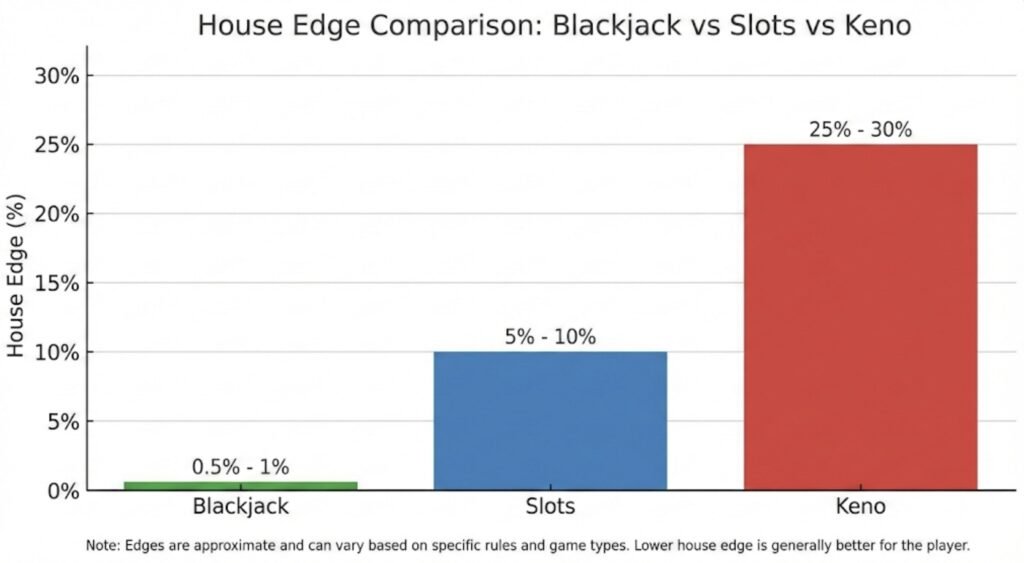
Each game has its own house edge, and the difference can be significant. Games like blackjack, especially when played with a solid strategy, often have a house edge below 1%. On the other hand, options like keno or certain slot machines can have edges well above 10%. These differences mean your choice of game plays a big role in your chances of success.
Knowing the house edge isn’t about avoiding casino games altogether—it’s about playing smarter. If you prefer better odds, stick to games with a lower edge. But remember, no matter how lucky you feel, the house edge guarantees the casino will always have an advantage in the long run. That’s why it’s important to enjoy the experience responsibly and set limits.
How is House Edge Calculated? (A Simple Example)
To truly understand the house edge, it helps to look at the maths. Don’t worry—it’s simpler than it sounds. The easiest way to see it in action is with a standard European Roulette wheel.
- The Wheel: A European wheel has 37 numbers (1–36, plus a single 0).
- The Odds: The true odds of hitting a specific number are 1 in 37.
- The Payout: If you win, the casino typically pays you 35 to 1 (plus your original stake back).
Here is the catch: If you placed a £1 chip on every single number on the wheel, you would spend £37 in total. However, only one number will win. The dealer would pay you £35 in winnings plus your £1 original bet, giving you a total of £36.
- You spent: £37
- You received: £36
- The Casino kept: £1
That missing £1 is the house edge. In this case, £1 divided by £37 equals 2.7%. No matter how lucky you get in the short term, the maths guarantees the casino this 2.7% profit over millions of spins.
What Is RTP (Return to Player)?
RTP, or Return to Player, is a term that explains how much of the money wagered on a game is paid back to players over time. It’s shown as a percentage and gives you an idea of the game’s fairness. For example, a game with an RTP of 96% means that, on average, £96 of every £100 wagered is returned to players, while the casino keeps the remaining £4.
It’s important to remember that RTP is a long-term average calculated over thousands or even millions of rounds. This means your short-term results might be much better—or much worse—than the stated RTP. Slot machines, table games, and even live dealer games all have their own RTP rates, which can vary widely depending on the specific game and how it’s designed.
Understanding RTP can help you choose games that give you better value for your money. Games with higher RTP percentages tend to return more of your wagers over time, making them a smarter choice for players who want to stretch their bankroll. While it doesn’t guarantee wins, knowing the RTP allows you to approach games with a clearer understanding of their potential payouts.
How House Edge and RTP Work Together
House edge and RTP are two sides of the same coin—they work hand in hand to define how casino games operate. Essentially, the house edge represents the casino’s advantage, while RTP shows the percentage of wagers returned to players over time. When combined, they always equal 100%. For example, if a game has an RTP of 95%, the house edge is 5%.
This relationship highlights the balance between what you can expect to win back and what the casino earns over the long term. Games with a lower house edge (or higher RTP) give players better odds, but it’s still important to remember that both are based on long-term averages. While RTP focuses on how much a game theoretically pays back, the house edge ensures the casino remains profitable.
For players, understanding this dynamic is essential when choosing games. If you’re looking to maximise your chances of winning or stretch your budget, aim for games with high RTP and a low house edge. However, no matter how favourable the numbers look, luck always plays a role in the short term, so play responsibly and enjoy the experience.
Why Understanding These Terms Matters
- Picking the Right Games
When you understand house edge and RTP, you’re better equipped to choose games that suit your style and goals. For instance, blackjack often has a much smaller house edge compared to slots, making it a smarter choice for players who like games with better odds. By focusing on games with favourable numbers, you can stretch your budget or just have a better chance of walking away with a win. - Setting Realistic Expectations
These concepts help you see the bigger picture. A high RTP doesn’t mean you’ll win every time, just like a low house edge doesn’t guarantee luck is on your side. They’re long-term averages, not promises. Understanding this can keep you from feeling frustrated when things don’t go your way in the short term. - Planning Your Play
Knowing the house edge and RTP of a game can help you manage your money more effectively. Games with a high house edge might call for smaller bets or shorter sessions, while games with better odds could let you play longer on the same budget. It’s all about adjusting your strategy so you stay in control and have more fun.
When you know how house edge and RTP work, you’re not just spinning the wheel or placing bets blindly—you’re playing smarter. This knowledge can make your casino experience more enjoyable and help you avoid some of the pitfalls that come with not understanding the odds.
The Missing Link: RTP vs. Volatility
While RTP tells you how much a game pays back over time, Volatility (often called Variance) tells you how it pays back. Understanding the difference is vital for managing your bankroll.
- Low Volatility: These games pay out smaller amounts but more frequently. You might not win a life-changing jackpot, but your bankroll will likely last longer.
- Example: Starburst (Slot), Blackjack.
- High Volatility: These games pay out less often, but the wins can be massive. You might endure long losing streaks before hitting a big win.
- Example: Progressive Jackpot Slots, Roulette (Single Number bets).
Why does this matter? A slot machine with 96% RTP and High Volatility might take 500 spins to return that 96%, meaning you could run out of money before the “average” kicks in. Conversely, a 96% RTP slot with Low
Volatility will likely keep your balance steady for longer. Don’t just look at the percentage; look at the volatility rating to match your risk appetite.
Common Myths About House Edge and RTP
- “High RTP Means You’ll Win Often”
A common misunderstanding is that a high RTP guarantees frequent wins. In reality, RTP reflects long-term averages over countless rounds of play—it’s not a promise of what will happen during your session. You could hit a lucky streak or face a cold spell, regardless of the RTP. - “All Casino Games Have the Same Edge”
It’s easy to assume every game is on equal footing, but that’s not the case. Each game—and even variations within the same category—has its own house edge. Take roulette, for example: European roulette offers better odds than American roulette, thanks to the absence of the “00” slot. Knowing the differences can give you an edge when choosing where to play. - “Skill Can Beat the House”
While skill-based games like poker or blackjack allow you to influence the outcome, they don’t eliminate the house’s advantage entirely. A skilled blackjack player might cut the house edge down to less than 1%, but the casino always retains a slight edge. That’s how they keep the lights on. - “Small Bets Don’t Need Strategy”
Some people think the house edge doesn’t matter when placing small bets, but this isn’t true. Whether you’re wagering a pound or a hundred, the same rules apply. Over time, even small bets are subject to the game’s built-in advantage.
By debunking these myths, you can approach casino games with clearer expectations and a sharper strategy. The more you understand how house edge and RTP actually work, the more enjoyable—and controlled—your gaming experience will be.
Tips for Choosing Games with Favourable Odds
- Do Some Homework
Before jumping into a game, take a moment to check its house edge and RTP. Many online casinos make these numbers easy to find, so you can compare options quickly. Picking games with a high RTP or low house edge gives you a better shot at getting more value for your money. - Play Games Where Skill Matters
If you’re looking to improve your odds, go for games where strategy can make a difference, like blackjack or poker. While luck still plays a big role, knowing how to play smart can reduce the house’s edge and give you more control over the outcome. - Stay Away from High-Edge Games
Games like keno or certain slot machines might be fun, but they often come with a hefty house edge. While they’re great for a bit of lighthearted entertainment, they’re not your best bet if you’re aiming for value or longevity. - Learn the Rules First
Don’t dive into a game blind—knowing the rules can save you from costly mistakes. This is especially true for games like craps or blackjack, where even a basic understanding can make a huge difference. Take the time to learn before you play. - Look for Good Deals
Casino bonuses and promotions can stretch your bankroll. Free spins, cashback, or matched deposits are worth exploring, but make sure you read the fine print so you know exactly what you’re getting. Not all deals are as good as they seem.
Choosing games with favourable odds isn’t about guaranteeing a win—it’s about making smarter decisions that let you enjoy your time and money more. Pick wisely, play responsibly, and most importantly, have fun! The Casino Count blog has lots more guides and information if you want to be fully prepared for your online gambling experience.
Quick Reference: Best & Worst House Edges
Not all games are created equal. Use this table to instantly see which games offer the best value for your money and which ones are harder to beat.
| Game | House Edge (Approx.) | RTP (Approx.) | Verdict |
| Blackjack (with basic strategy) | 0.5% | 99.5% | Best Odds |
| Baccarat (Banker Bet) | 1.06% | 98.94% | Excellent |
| French Roulette | 1.35% | 98.65% | Very Good |
| Craps (Pass/Come) | 1.41% | 98.59% | Good |
| European Roulette | 2.70% | 97.30% | Average |
| Online Slots | 2% – 5% | 95% – 98% | Varies |
| American Roulette | 5.26% | 94.74% | Poor |
| Keno | 20% – 40% | 60% – 80% | Worst Odds |
Note: Blackjack odds assume you are playing with “Basic Strategy”. Without strategy, the house edge can rise to 2% or more.
Conclusion
Knowing how house edge and RTP work can make a big difference in how you approach casino games. The house edge shows how much of an advantage the casino has, while RTP reveals how much a game pays back to players over time. These aren’t just numbers—they’re tools that can help you make better decisions when picking games and managing your bankroll.
Whether you’re someone who loves the excitement of big bets or prefers games with smaller risks, understanding these concepts puts you in control. It’s not about beating the casino; it’s about playing smarter, knowing your limits, and making the most of your time.
Want to dive deeper? Check out more of our guides to sharpen your skills and learn even more about how casino games work. The more you know, the better your chances of having a great time—good luck! Our blog, Online Casino Lingo Terms Every Player Should Know has lots of great information to help you through your online gambling journey.
Frequently Asked Questions (FAQ)
Which casino game has the lowest house edge?
Blackjack generally offers the lowest house edge, often as low as 0.5% if you play using a basic strategy. Baccarat is a close second, with the Banker bet offering a house edge of just 1.06%.
Can a game have an RTP of over 100%?
In theory, no. If a game had an RTP of over 100%, the casino would lose money on it indefinitely. However, in the short term, players often experience returns of over 100% when they hit a jackpot or a lucky streak.
Does a 96% RTP mean I will win £96 back for every £100 I bet?
Not necessarily. RTP is a statistical average calculated over millions of spins. In a short session, you might win £200 or lose everything. The 96% figure is a long-term theoretical guide, not a guarantee for a single session.
Is the house edge the same at all online casinos?
Not always. While table games like Roulette usually have fixed odds, casinos can choose different RTP settings for the same Slot game (e.g., one casino might host a slot at 96% while another hosts it at 94%). Always check the game information tab before you play.
Why is American Roulette worse than European Roulette?
American Roulette has an extra “Double Zero” (00) pocket on the wheel. This adds an extra losing outcome for players without increasing the payout, nearly doubling the house edge from 2.70% (European) to 5.26% (American).





Leave a Reply to Online Casino Lingo: Terms Every Player Should Know – The Casino Count Cancel reply